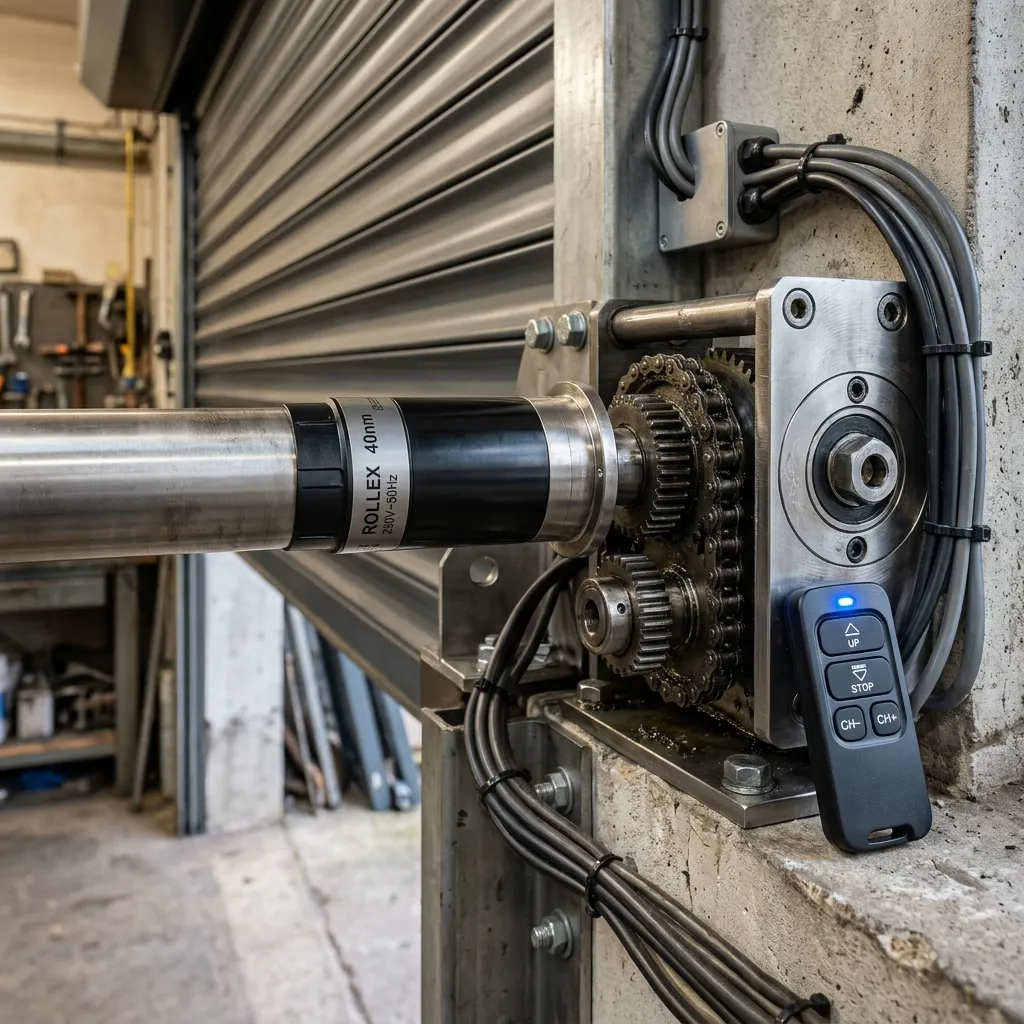
Motorised vs Manual Rolling Shutters: Which Is Right for You?
Table of Contents
The question we hear most often from new customers: "Is it worth paying extra for a motorised shutter?" The honest answer depends on how often you open the shutter — and the maths are simple once you lay them out.
The Cost Difference
For a standard 8×8 ft aluminium shutter, the Fitted options depend on layout specifications:
- Manual: ₹10,000–₹15,000
- Motorised (300kg rated motor): ₹18,000–₹26,000
The premium for motorised is ₹8,000–₹11,000. That is the number to evaluate against the operational benefits.
Break-Even Analysis
A manual shutter takes 2–4 minutes per cycle including unlocking, lifting, locking at the top, and reversing on close. For a shop open 6 days a week with 4 cycles daily (open morning, close lunch, open afternoon, close evening), that is:
- ~12 minutes of manual effort per day
- ~1.2 hours per week
- ~60 hours per year
At a conservative ₹200/hour valuation of your time, manual effort costs ₹12,000 per year. The motorised premium pays back in under a year for any shop with 4+ daily cycles.
Spring wear is the other factor. Manual operation causes uneven spring loading — jerky pulls accelerate fatigue. Motorised shutters typically see spring replacement at 8–12 years vs 3–6 years for heavily-used manual shutters.
What Happens in a Power Cut?
This is the biggest concern people raise. The answer: all GRS motorised shutters include a manual override. When power fails, a release key disengages the motor gearbox, and the shutter operates as a manual spring-balanced unit. Opening and closing in a power cut takes approximately the same effort as a standard manual shutter.
For areas with frequent power cuts: We recommend adding a battery backup module (₹2,500–₹4,000 extra). It provides 20–30 open/close cycles on battery, eliminating the manual override need entirely.
Side-by-Side Comparison
| Feature | Manual | Motorised |
|---|---|---|
| Warranty Support | 2-Year Standard | 2-Year Standard (Motor & Gear) |
| Estimated Cost (Fitted) | ₹10,000 – ₹15,000 | ₹18,000 – ₹26,000 |
| Opening time | 2–4 min | 15–25 sec |
| Physical effort | Required each cycle | None — remote button |
| Spring lifespan (heavy use) | 3–6 years | 8–12 years |
| Power cut operation | Normal | Manual override key |
| Access control options | Key lock only | Remote, keypad, app, GSM |
| Noise level | Moderate (manual effort noise) | Low (motor hum only) |
| Suitable for openings > 16 ft | Difficult — too heavy | Yes — motor sized to load |
Smart Motorised Features Worth Considering
If you are going motorised, consider these add-ons at installation time — retrofitting them later costs more:
- Auto-stop obstacle detection: Motor reverses if it hits an obstruction on closing. Standard safety feature on all GRS motors.
- Timer control: Automatically closes the shutter at a set time — useful for multi-staff shops where the last person may forget.
- Remote monitoring: SMS alert when shutter is opened or closed — useful for monitoring staff access.
- Loop detector: Sensor in driveway triggers automatic opening. Eliminates the need to even press a button for vehicle access.
"For any shop opened more than 4 times daily, motorised is worth the extra investment."
Our Recommendation
Choose manual if: you have a small seasonal or low-footfall shop (fewer than 2 daily cycles), your opening is under 10 ft wide, or budget is the primary constraint.
Choose motorised if: your shop opens daily, you have multiple staff, your opening is wider than 12 ft, you have a vehicle-access requirement, or you want access control options beyond a physical key.
For most commercial shops nationwide that are open 6 days a week, motorised is the right choice. The operational savings and spring longevity make the extra cost a good investment within the first year.