Complete Guide to Rolling Shutter Maintenance
Table of Contents
A well-maintained rolling shutter runs for 15–25 years with minimal repair cost. A neglected one fails in 3–5 years, often at the worst time — when your shop is full or you are trying to close up at night. This checklist takes less than an hour annually and prevents 90% of common failures.
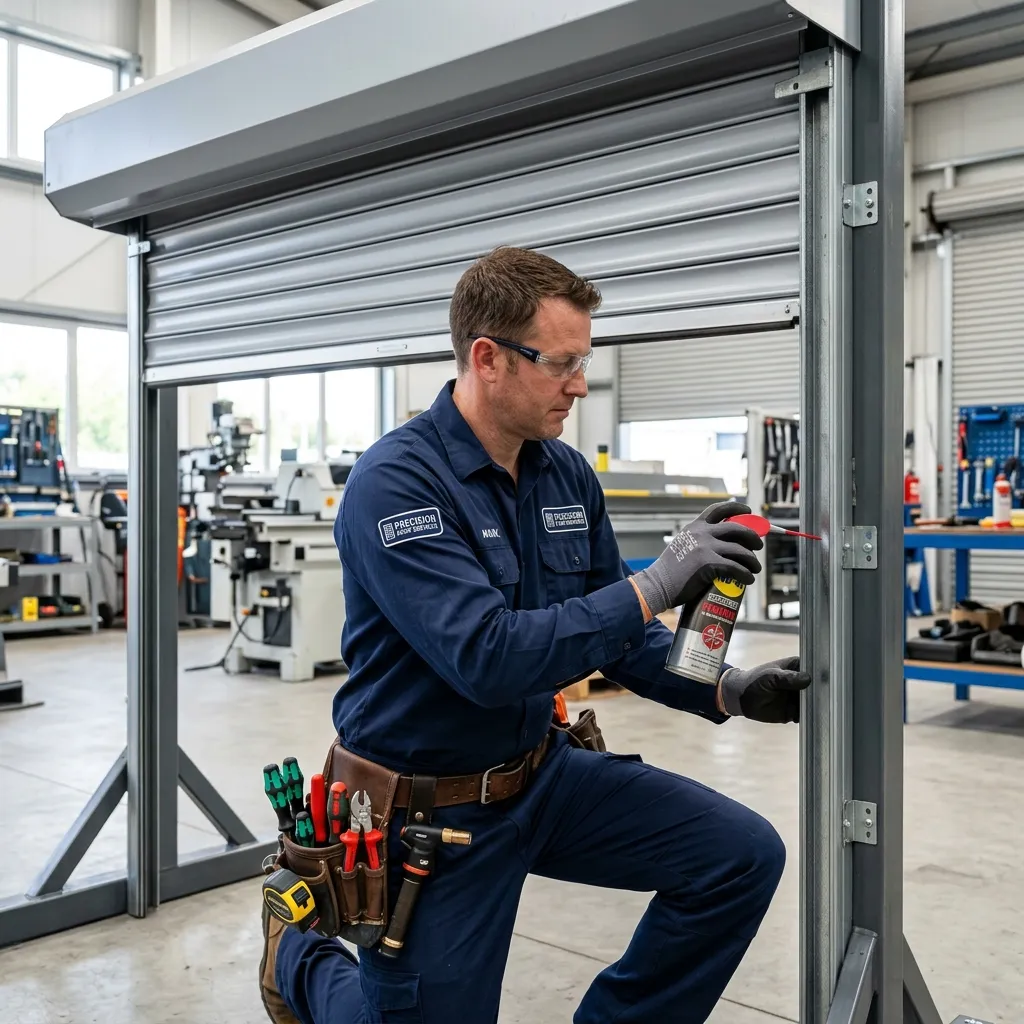
1. Lubricate the Side Rails
The side guide rails are the channels the curtain runs in. Over time, dust, debris, and oxidised lubricant build up inside, causing the curtain to bind, squeak, or jump off track.
What to do: Clean the inside of both rails with a dry cloth. Apply a thin coat of a silicone-based lubricant or light machine oil — not grease, which attracts dust. Run the shutter 3–4 times after application to distribute. Do this every 6 months in dusty environments, once a year otherwise.
2. Inspect the Bottom Profile
The bottom bar takes the most abuse — it hits the floor on every close cycle, scrapes debris, and is the first point of forced-entry attempts. Check for:
- Bending or bowing (should be straight along its full length)
- Damaged rubber seal on the floor side — replace if cracked or missing
- Loose end caps or locking bar hooks
- Any welds or joints that are cracking
A bent bottom bar causes the curtain to bind in the rails and dramatically increases spring wear.
3. Check Spring Tension
The coil spring is the most safety-critical component. A broken spring can cause the curtain to drop rapidly. Signs of spring issues:
- Shutter feels noticeably heavier to lift than when new
- Shutter drops faster than it should on closing
- Loud snap or bang sounds from the hood area
Important: Do not attempt to adjust spring tension yourself. The stored energy in a rolling shutter spring is high — incorrect adjustment can cause sudden release and injury. Call a technician if spring tension seems off.
4. Tighten All Fasteners
Vibration from daily operation loosens screws and bolts over time. Check and tighten:
- Hood mounting brackets (top of the installation)
- Side guide anchor bolts into the wall
- Motor mounting bolts (if motorised)
- Any junction box or control panel fixings
Loose brackets cause rocking, which accelerates curtain and guide wear significantly.
5. Service the Lock Mechanism
A lock that is stiff, sticking, or requiring excessive force is a failure about to happen. Apply a small amount of graphite powder or light oil into the lock cylinder. Test the full key throw in both directions. Check that the lock engages smoothly into the bottom profile receiver — if it is misaligned, the bar is bent and needs replacement.
6. Clean the Curtain
For aluminium shutters: wipe down with a mild detergent solution and a soft cloth. Rinse with clean water. Do not use abrasive pads or acidic cleaners, which strip the anodised or powder-coated finish.
For galvalume or GI steel: clean with a damp cloth and dry thoroughly. Apply a light coat of anti-corrosion spray to any bare metal edges where cut sections are exposed — these are the first points of rust formation.
7. Motorised Shutter Checks
For motorised shutters, additionally check:
- Travel limits: The shutter should stop at the same fully-open and fully-closed positions every time. If it over-travels or under-travels, the limit switches need adjustment.
- Remote handset batteries: Replace annually — low battery causes intermittent operation that owners often mistake for a motor fault.
- Motor temperature: After 10 continuous cycles, the motor housing should be warm but not hot. Excessive heat indicates overloading.
- Manual override: Test the override key annually — confirm it releases smoothly and the shutter operates manually when disengaged.
8. Rust and Corrosion Inspection
Even aluminium shutters can corrode at galvanic contact points — where aluminium meets steel fasteners or guide brackets. Inspect all metal-to-metal contact points. Any white powdery residue on aluminium or orange rust on steel brackets needs immediate treatment — clean with a wire brush, apply zinc-based primer, and repaint with metal paint.
For GI steel curtains in high-humidity environments or areas near construction: inspect the entire curtain face annually. Early-stage rust (surface staining) can be treated. Advanced rust (pitting or perforation) means curtain replacement.
"A rolling shutter that is never maintained will fail sooner — and repair costs are always higher than preventive maintenance."
When to Call Immediately
Do not wait for the annual check if you notice any of these:
- Shutter jumps off the side guide rail
- Loud grinding or metal-on-metal scraping sounds
- Shutter drops faster than normal speed on closing
- Motor runs but curtain does not move
- Bottom bar visibly bent or misaligned
- Shutter will not lock fully closed
Annual Maintenance Contract (AMC): Our AMC covers two service visits per year — lubrication, limit adjustment, spring inspection, cleaning, and minor adjustments. ₹1,800–₹3,200 per year depending on shutter type. Call +91 99712 49043 for details.