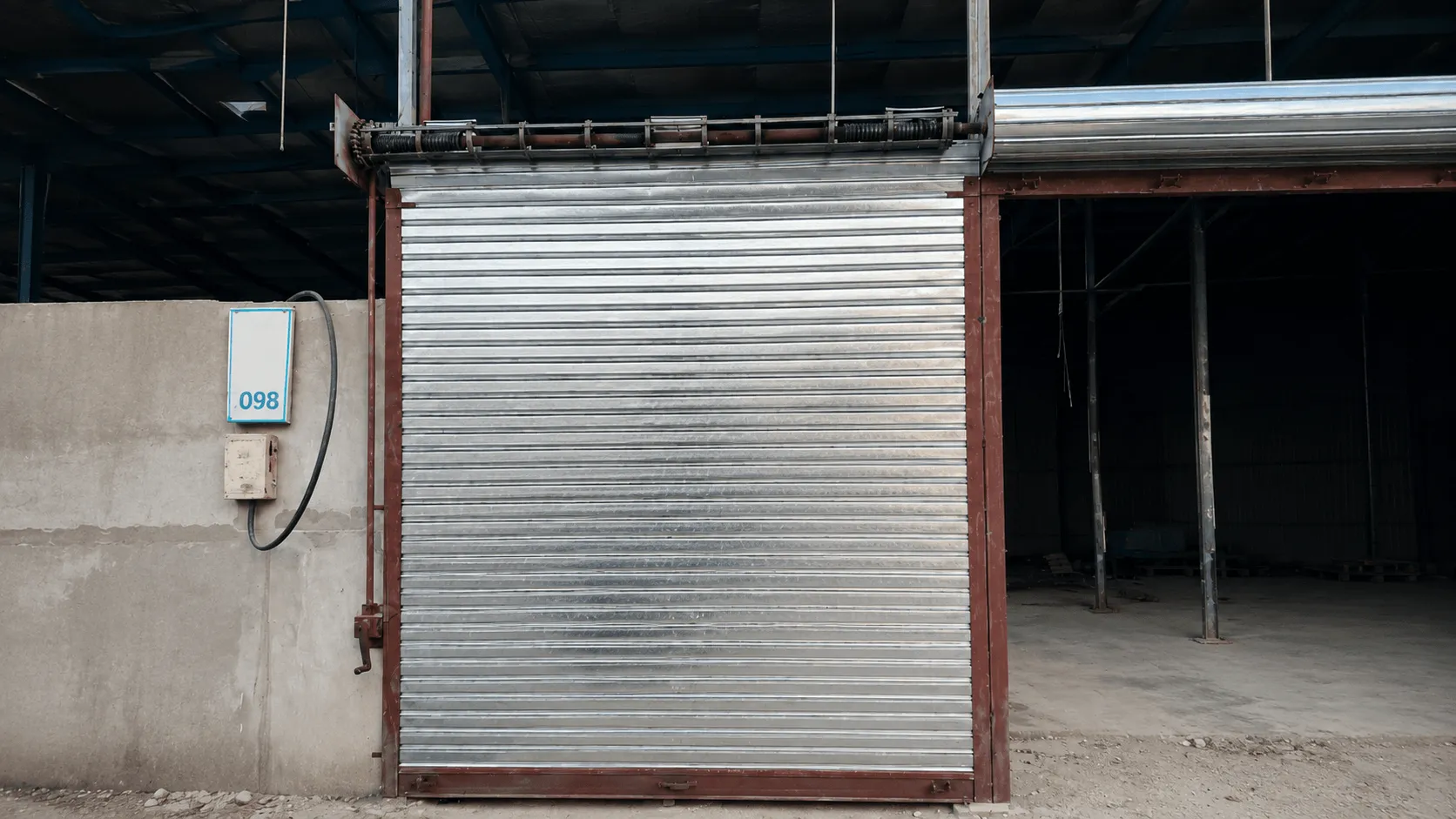
Flipkart Warehouse Rolling Shutter Project — GRS Case Study
Table of Contents
When Flipkart's logistics infrastructure team required rolling shutters for two new fulfilment centre expansions — in Jodhpur, Rajasthan, and Bilaspur, Chhattisgarh — they needed a manufacturer who could supply custom-sized heavy-duty units, install across two geographically distant sites on a coordinated timeline, and complete the work before go-live dates fixed by Flipkart's operations calendar.
This is a detailed account of how GRS approached that project — the specification decisions, the logistical challenges, and what we would do the same or differently on a similar project today.
Project Brief
| Parameter | Jodhpur Site | Bilaspur Site |
|---|---|---|
| Facility type | Flipkart fulfilment centre | Flipkart logistics hub |
| Location | Industrial area, Jodhpur, Rajasthan | Industrial area, Bilaspur, CG |
| Opening count | 18 dock bays + 6 side access | 12 dock bays + 4 side access |
| Shutter type | GI motorised, heavy-duty | GI motorised, heavy-duty |
| Go-live deadline | Fixed (operations calendar) | Fixed (operations calendar) |
The Challenge
Three specific challenges made this project non-trivial:
1. Non-standard opening sizes
Flipkart's warehouse structural drawings specified dock bay openings at 4,800mm × 5,200mm — a non-standard size that most suppliers would need 4–6 weeks to fabricate. The side access openings were 3,200mm × 3,500mm. Both required custom drum sizing and twin-motor configuration for the larger bays.
2. Two-site simultaneous delivery
Jodhpur and Bilaspur are 1,200km apart. Delivering to both sites within a 3-day window required coordinated logistics from our Delhi workshop — two separate dispatch batches with staggered loading schedules and site-specific installation crews deployed in parallel.
3. Rajasthan summer heat
The Jodhpur installation ran in late April–May, with ambient temperatures reaching 46°C. Motor selection had to account for the reduced motor efficiency at high ambient temperatures — standard commercial motors begin thermal derating above 40°C. This required specifying motors with a higher base torque rating than the curtain weight calculation alone would indicate.
Specification Selected
Dock Bay Shutters — 4,800 × 5,200mm
- Curtain 0.8mm Z275 galvalume steel, 77mm C-profile
- Configuration Twin motor (one per side) — required for 4,800mm+ widths
- Motor FAAC D600 — 600 Nm output, heavy industrial duty
- Spring Heavy-duty galvanised torsion, rated 100,000 cycles
- Guide rails 100mm deep galvanised steel (upgraded from standard 75mm for wind load)
- Wind bars 2 × mid-span stiffeners per curtain (Jodhpur desert wind zone)
- Bottom bar Double-lip EPDM seal with aluminium carrier extrusion
- Motor thermal rating 55°C ambient (standard for Rajasthan summer)
Side Access Shutters — 3,200 × 3,500mm
- Curtain 0.8mm Z275 galvalume steel, 77mm C-profile
- Motor FAAC D300 — 300 Nm single motor
- Spring Commercial galvanised torsion, rated 50,000 cycles
- Guide rails 75mm galvanised steel
- Controls Key switch + radio remote + provision for future security system interface
Motor specification decision: For the Jodhpur dock bays, we specified the FAAC D600 at 600 Nm despite the curtain weight calculation indicating 400 Nm would be technically sufficient. The 50% torque margin was deliberate — accounting for spring tension loss over time, peak summer ambient derating, and the high cycle count expected at a Flipkart fulfilment centre (40–80 cycles per bay per day). Undersizing here would have meant motor replacement within 18 months.
Delivery & Installation
Total fabrication time from order confirmation to dispatch: 14 working days. This required running both sites' curtain fabrication in parallel at our Delhi workshop — two separate production schedules sharing the same fabrication floor.
Dispatch sequence:
- Day 14: Jodhpur batch dispatched — 24 shutter units, 2 trucks. Transit time: 10 hours to Jodhpur site.
- Day 15: Bilaspur batch dispatched — 16 shutter units, 1 truck. Transit time: 18 hours to Bilaspur site.
- Day 15–18: Jodhpur installation crew (5 technicians): 24 units installed in 4 days working extended hours to meet go-live.
- Day 16–18: Bilaspur installation crew (3 technicians): 16 units installed in 3 days.
- Day 18: Both sites completed and signed off. Operations go-live on schedule.
"Two sites, 40 shutters, 18 working days from order to sign-off. The logistics coordination was as important as the fabrication."
Outcomes
Both facilities went live on schedule. Specific outcomes reported by Flipkart's facilities team:
- All 40 shutters operational at go-live — no snags requiring post-handover corrections.
- Zero motor failures in the 12 months following installation (Flipkart conducted a 12-month review).
- The twin-motor dock bay shutters were noted by the operations team as particularly reliable — consistent open/close times even under high-cycle use during peak dispatch periods (Diwali season).
- Jodhpur motors maintained performance through summer — the 55°C ambient rating proved its value during the peak June heat.
Learnings — What We Would Do the Same, and What We Changed
Keep: Motor torque margin for large industrial projects
Specifying 50% above the calculated minimum torque requirement on high-cycle industrial applications has become our standard practice for any project with projected cycle counts above 40 per day. The premium over base specification is modest (8–12% of motor cost) and the reliability gain is significant.
Change: Phased delivery communication
Managing two simultaneous site deliveries revealed gaps in our communication protocol. We now require a dedicated site coordinator for multi-location projects — a single point of contact who tracks both dispatch and installation progress across sites in real time.
Keep: Wind bar specification for desert zone
Jodhpur's Loo winds (hot desert winds reaching 80–100 km/h in summer) require wind bars on any curtain above 3,000mm in width. The additional cost is minimal (₹1,800–2,500 per curtain) and the alternative — curtain billowing and guide rail damage — would have been costly to repair.